
Connect multiple databases through a unified CommonDB and transform data reliably as it moves between systems.
What Is Delta Hub?
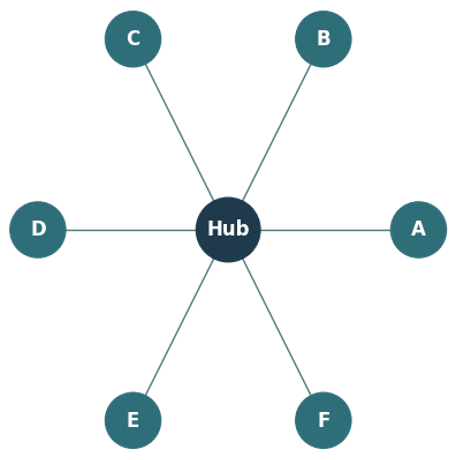
Delta Hub is a centralized data platform that replaces point-to-point integrations with a governed CommonDB layer. Each system connects once to the hub; as data flows, configurable transformations validate, standardize, and prepare information for analytics and operations.
This architecture reduces integration cost and risk, accelerates delivery timelines, and gives teams trustworthy, auditable data for reports and applications.
Key Advantages:
-
Connect once: onboard sources and consumers without re-wiring everything.
-
Standardize once: reuse mappings and rules across multiple pipelines.
-
Operate with confidence: lineage, monitoring, and rollback built in.
Why Modern Teams Choose a Hub-and-Spoke Model
Legacy integrations are brittle. A single schema change can cascade into costly downstream fixes. A hub-and-spoke model turns that chaos into clarity: connect once, standardize once, and reuse everywhere.
With Delta Hub, you can change ERPs, CRMs, or analytics tools without rebuilding every interface. Governance and quality stay consistent, even as systems evolve.
Clear Business Value
Reduce Integration Costs
Centralizing data onboarding and transformation in the CommonDB prevents duplicated logic. Teams implement mappings and rules once, then apply them consistently across all data flows—simplifying testing and reducing long-term maintenance.
Accelerate Reporting and Analytics
Consistent data models mean analysts can trust the numbers. Reports don’t break when source schemas change, and new dashboards can be built with standardized entities rather than bespoke extracts.
Lower Risk and Strengthen Compliance
Validation, lineage, and audit logging are enforced as data moves through the pipeline. This improves reliability and makes it easier to demonstrate compliance with internal policies and regulations.
The Results:
-
Faster time-to-value for new projects and systems
-
Lower total cost of ownership for integrations and BI
-
Reduced operational risk through monitoring and rollback
The Problem Delta Hub Solves
Many organizations rely on siloed databases, manual extracts, and brittle scripts. These patterns cause stale reports, inconsistent KPIs, duplicated logic, and unpredictable outages. Delta Hub replaces ad-hoc processes with a governed, repeatable approach to collecting, cleaning, transforming, and sharing data.
How Delta Hub Works
1) Connect to the CommonDB
Each source system (ERP, CRM, operational database) lands data into the CommonDB—a curated schema that acts as a single point of truth. This avoids bespoke, fragile connections between every pair of systems.
2) Apply Transformations as Data Moves
As data travels into CommonDB and out to targets, the platform applies reusable rules—type casting, enrichment, normalization, de-duplication, and business validations. Transformations are version-controlled to evolve safely over time.
3) Govern, Monitor, and Audit
Delta Hub tracks lineage from source to destination, validates schema expectations, and records every load and transform event. Operators monitor throughput, spot data quality issues early, and roll back when needed.
4) Deliver to Any Destination
Standardized data can be published to warehouses, application databases, APIs, or reports—without rebuilding upstream plumbing. Adding a new consumer is as simple as mapping from CommonDB to the new target.
Key Capabilities
Universal Connectivity
Connect heterogeneous databases and applications through a single, consistent interface. Whether your ecosystem spans SQL platforms, line-of-business tools, or custom apps, Delta Hub supports onboarding without bespoke code.
Configurable Transformations
Define transformation logic once and reuse it across pipelines. Standardize reference data, harmonize codes and units, and apply business rules so every downstream consumer sees coherent, high-quality data.
Central Web Management
A secure web UI provides configuration, scheduling, and operational dashboards. Teams can promote changes through environments and collaborate without digging into brittle scripts.
Quality and Integrity Built-In
Schema validation, referential integrity checks, and exception handling are first-class citizens. The platform flags anomalies early and prevents bad data from propagating.
Scalable and Observable Operations
Process large volumes with confidence. Detailed run logs and metrics help trace issues, quantify performance, and continuously improve throughput as your data landscape grows.
Additional Features:
-
Lineage: end-to-end traceability for audits and troubleshooting
-
Monitoring: alerts and dashboards for pipeline health
-
Recoverability: safe retries and rollbacks to protect downstream systems
Popular Use Cases
360° Reporting Across Systems
Combine finance, sales, and operations into a single analytics model without forcing each department to change tools. Delta Hub normalizes and merges data into CommonDB, then publishes curated datasets for BI.
System Migrations and Modernization
Swap or upgrade core systems without breaking downstream integrations. Map the new source to the existing CommonDB and keep every consumer running with minimal change.
Operational Data Sharing
Synchronize reference and master data between applications. Transformations ensure consistent codes, formats, and validations as data moves—reducing manual fixes and reconciliation.
Implementation Journey
Plan and Align
Define scope, success metrics, and target entities for the CommonDB. Early alignment ensures that data models reflect real usage and that first integrations deliver fast, visible value.
Design the CommonDB
Model shared entities (customers, products, orders) with clear ownership and naming conventions. This creates a stable backbone that new systems can plug into later without rework.
Configure Pipelines and Transformations
Map source fields to the CommonDB and define transformation rules. Automated validation prevents schema drift and keeps downstream consumers reliable.
Test, Validate, Go-Live
Run data quality checks, reconcile outputs, and tune performance before launch. With auditing and rollback available, you can deploy with confidence and iterate safely.